3D Box Overwrapping vs Heat Shrink Wrapping vs HFFS Flow Wrapping
Engineering comparison of 3D BOPP overwrapping, POF shrink tunnels, and pillow flow wrappers across aesthetics, kW energy draw, film waste, and changeover.
Choosing the Right Clear Film Architecture for Boxed Goods
Factory managers wrapping rigid cartons usually weigh three clear-film technologies: 3D envelope overwrapping (folded corners), L-bar + heat-shrink tunnel wrapping (POF/PVC), and horizontal pillow flow wrapping (HFFS fin/crimp bag). Within carton overwrapping applications and BOPP and cellophane film specs, the right choice comes down to shelf positioning, thermal sensitivity, energy draw, and SKU shape.
Overwrapping wins on luxury folded corners, tear-tape convenience, low ~5 mm overlap waste, and 1.5–4.0 kW power efficiency; shrink wrapping handles irregular non-cuboid shapes; flow wrapping delivers ultra-high speed when pillow fins are acceptable.
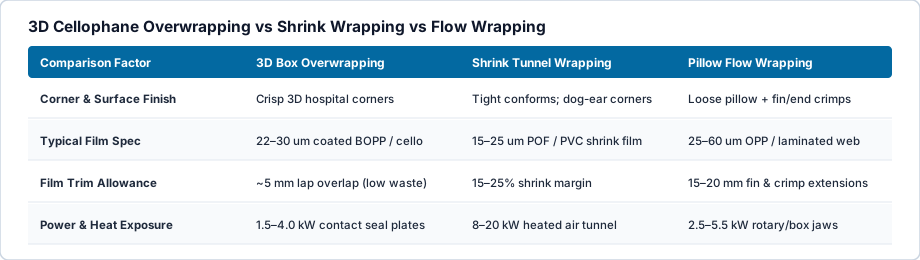
Head-to-Head Process Comparison Matrix
Compare real shop-floor metrics across all three wrapping families:
| Evaluation Metric | 3D BOPP Box Overwrapper | L-Bar + POF Shrink Tunnel | HFFS Pillow Flow Wrapper |
|---|---|---|---|
| Visual Shelf Presentation | Crisp 3D hospital corners + tear tab | Tight skin, bunched ‘dog-ear’ corners | Loose pillow bag with protruding end crimps |
| Typical Electrical Load | 1.5 kW (semi) to 3.5–4.0 kW (auto) | 8 kW to 20+ kW continuous heat tunnel | 2.5 kW to 5.5 kW servo + jaws |
| Product Thermal Exposure | Room temp (contact plates on lap only) | 140–180 °C tunnel air around entire box | Room temp (end jaws outside product) |
| Film Waste / Trim | ~5 mm overlap; zero edge-trim scrap | 10–20% L-bar trim scrap + shrink allowance | 15–20 mm fin & end-crimp film extensions |
| Shape Flexibility | Rigid cuboid / rectangular boxes only | Handles round, oval, bottles & odd gift sets | Handles bars, trays, loaves & irregular solids |
Ready to evaluate machine budgets? Read cellophane wrapping machine price.
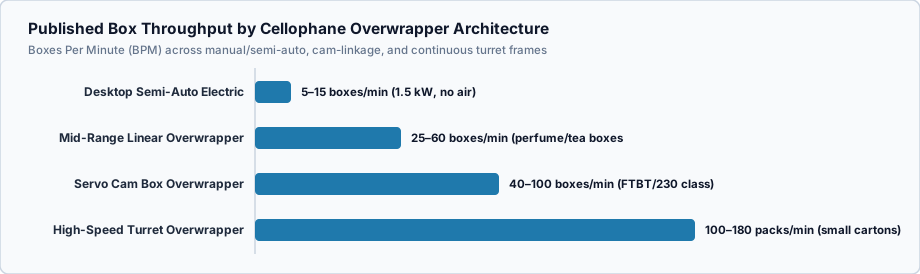
3D Overwrapping Engineering Notes
- Energy Payback over Shrink Tunnels: Cutting 10–14 kW of continuous shrink-tunnel heater load saves 20,000–30,000 kWh/year per single-shift line—plus lower HVAC cooling load.
- Easy-Open Consumer Experience: Shrink film forces customers to scratch at tough POF seams, whereas integrated tear tape opens an overwrapped carton in one clean pull.
- When NOT to Use 3D Overwrapping: If your package is cylindrical, hexagonal, or soft-sided without a rigid boxboard frame, choose shrink or flow wrapping instead.
Compare Samples on Your Own Box
Ask our engineers to evaluate your carton rigidity and volume via Project Brief.
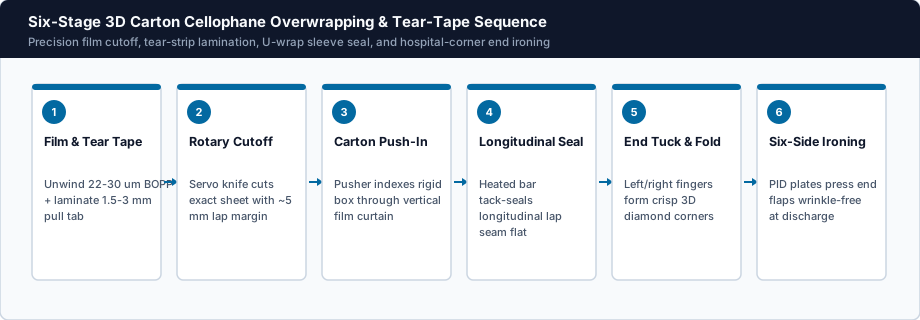
Explore related systems in Cellophane Wrapping Machines, BOPP & Cellophane Film Specs, or submit your carton L×W×H via Project Brief.
Related Specifications
Further Reference
Verify Dimensions & Operating Ratings
Send your target envelope, load requirements, and ambient environment to review matching configurations.